Gang, with all the excellent publicity the Terrafugia Transition "roadable" LSA airplane has gotten this last year or so, you'd think they were the only game in town.
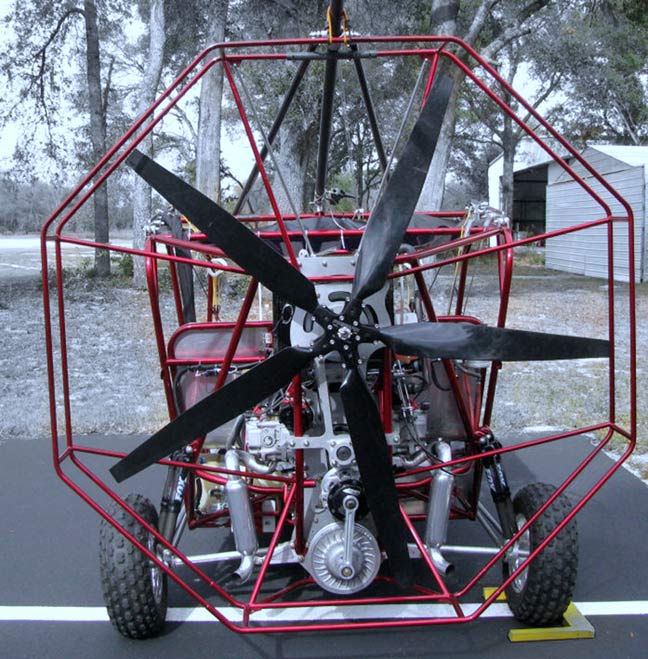
Meanwhile, back at flying car HQ, here comes the sleeper, with some important news under its (canvas) hood.
I've blogged about the Maverick Flying Car a couple times now (most recent post).
It's a project created by I-Tec in their mission to aid third world indigenous people in remote and rugged locales around the world.
To paraphrase Luke Skywalker, if the Transition is the bright promotional center of the universe, the Maverick has been the planet farthest from it...until now.
They've been quietly, and quite effectively, judging by the video below, getting the job done with their own unique approach to the flying car concept.
Without further ado, check out the vid below of the Maverick LSA...Para-buggy, Para-Car, Dune-Chute, whatever.
Make sure you check out the suspension and see how it handles the sand and all those bumps.
Then read on and I'll tell you what's coming next week at Oshkosh.
The company hopes to make an important announcement at Oshkosh Airventure.
I'll let spokesman Troy Townsend take it from here: "The rumors are mostly true. All of our testing is complete and we...may have our final ASTM paperwork at Oshkosh or right after.
Please come and say hello, we will most likely be with the Zenith aircraft boys at the Zenith booth."
Watching the Maverick tool around in the boonies...then take to the air...is a masterful stroke of video producing. Gotta say, it gave me a little thrill.
It even sounds cool!
Orto evoke the movie Jerry McGuire, "You had me with the ground stuff!"
Yesterday in our Ultraflight Radio interview Jim Sweeney and I compared and contrasted two red-hot digital instruments for the cockpit: theAdventure Pilot iFly 700 and the Apple iPad with its tons of aviation apps (see my earlier post on the Zlin iCub here:)
I also swapped emails with Walter Boyd of Adventure Pilot, who created and does all the incredible programming for the iFly 700, to learn more about these two amazing digital toys. Full Disclosure Moment: I just bought an iFly 700 yesterday - couldn't deny myself any longer!
First, the iPad, (projected to sell at least 6 million units by year's end -- over 3 mil already!), offers much more than a GPS moving map. As Walter acknowledges, it's a portable computer optimized for viewing rather than producing information, as on a laptop or netbook.
Next, it's big: a 9.7 inch diagonal, beautiful bright screen. And also a bit heavy at 1.5 or 1.6 lbs. (3G model). Other iPad features:
<> a headphone jack but that's it for external device connections.
<> connects via cell or wireless to the internet - a potential legal issue.
<> runs a zillion aviation apps, some free, some $99 or more; some with pricey yearly subscriptions
<> internal battery powers it for up to 10 hours.
<> $499 to $829 depending on configuration iFly 700 features:
<> has USB and MCX (external antenna) connectors for future upgrades to external devices
<> is a (non-FAA certified) navigation "aid" with incredible interactivity: touch-screen point-to-point flight planning, airport information, TFRs, airspace info and AIM airport info.
<> plugs into aircraft cigarette lighter or other cockpit power source, or accepts auxiliary battery power for 4 or more hours run time, depending on battery.
<> requires a $69/year subscription for frequent updates, which includes ALL U.S. sectional charts including Alaska and Hawaii and also IFR charts.
<> costs $499 including case and mounting aids.
Clearly, these are two very different animals that intersect at the GPS moving map functionality crossroads.
Which is right for you? Depends on whether you want the galaxy of fun apps that come with the iPad, or the iFly 700, a simpler, highly intuitive, powerful, extremely easy-to-use navigation aid.
More details:
Some of iPad's apps such as WingX Pro7 offer heaps of information but require annual subscription - in this case, $99/year. To get sectional charts you need another app, ForeFlight Charts, for $10/year, but it's only charts.
The iFly 700 allows "one-stop" navigating: Flight planning, route changes, airport info, nearest airport and more features are a fingertip touch away. And info displays right on top of the sectional chart. It's very cool, very easy to use, and just crammed with about any aviation data you could want.
"The iFly 700 is dedicated as an aviation GPS," Walter Boyd told me. "Folks buy it for the simplicity of it. They don't want to search for and install software. They don't want to wonder whether a problem is hardware vs. software, and who should they call for a fix."
The biggest difference between the two units is how each downloads information. "The iPad uses assisted GPS," Walter continues, "which relies on cell phone towers for initial location, which can take longer. If you lose the signal lock in flight, it may have a very tough time reacquiring the signal. Also, I don’t think there's an option for an external GPS antenna – so some cockpits will have GPS lock problems with the iPad."
"Native GPS devices traditionally are smarter at finding their location. It's rather amazing: signals from the satellites don't go through anything that's visible, even a sheet of paper! They bounce around off buildings, roads, trees. Sometimes units receive echoes or inverted signals...and yet it all works somehow. It does explain why GPS sometimes has trouble locking on some days but not others. Ripples in the ionosphere can effect that too."
'For those difficult situations, an external antenna can be put it the ideal location, but I don't believe you can do with the iPad, as it doesn't even have a USB port."
The big question I have, and I'm still looking for more information on this subject, revolves around the GPS legality issue.
"FCC requires airborne cell devices like iPad to disable 3G transceivers by switching to 'airplane mode'. Acquiring signals from the air can set off cell towers for miles around, which puts an enormous drag on the wireless grid. That's why FCC doesn't want cell phones powered up in the air, and you can get fined for it."
"Also, the iPad is big, and not an easy fit into every panel. We chose a 7" screen as the best balance of size and readability."
For the iFly 700 (excellent FAQ here), tap-in power isn't always reliable or available in aircraft. Many users (including me) buy auxiliary battery packs which power the unit for a few to several hours. That brings the overall weight into the same range as the battery-inclusive iPad, so call that one a push, although the battery can be stored elsewhere in the cockpit.
There's so much more to say about these two devices, I could write a book on it...which would be obsolete before it hit the printers as the tech is evolving rapidly.
Certainly the iPad with its 100,000 apps has tremendous appeal for aviators and gadget lovers alike. Colin Summers has a Top 20 iPad Apps article in the Sept. 2010 issue of Plane & Pilot you'll want to read to clue you in to iPad's aviating chops.
iFly 700 takes the other route: it's more conveniently sized, simpler, focused on its mission and highly capable at it, and expandable in ways the iPad may never be, such as being able to offer XM satellite weather and ADS-B (essentially a new technology in development that will be a low-cost, enhanced version of radar.)
Upgrades due out next month include north-up or track-up orientation.
Bottom line in this conversation is to think about what's right for you. You can make a strong argument for each one over the other.
One thing to remember, neither of these devices are certified by FAA for GPS navigation. Consider them "advisory" and as with any electronic device, make sure you've got analog instrumentation backup, a spare GPS, and/or a good old current sectional, just in case.
---iPad image and iFly 700 video courtesy Apple Computer and Adventure Pilot
I had some fun today talking with Jim Sweeney, guest host ofRoy Beisswenger'sUltraflight Radio Show. Our first topic was the state of the LSA industry. I first picked my pal Dan Johnson's satellite-view brain of the LSA Big Picture to glean we're looking at an industry that is weathering the economic storm and ready for an upswing.
Once the economy really ramps up, many observers feel LSA, which remain an incredible bargain compared to new GA airplanes, should pick up smartly. Let's toast that happy day! Tom Peghiny of Flight Design USA tells me sales are picking up, particularly from his network's dealers who are selling their inventory aircraft and ordering replacements.
We'll have hard numbers from Dan's colleague Jan Fridrich after Oshkosh Airventure on FAA registrations through mid-year but in general it's good to remember that companies are doing whatever it takes to survive in this prevailing market psychology of uncertainty.
Flight Design, (still #1 U.S. seller), Jabiru and American Legend lowered prices, created "economy" models or both, to stay competitive.
Flight Design has the CTLS Lite at around a $20,000 lower price, Jabiru dropped it's high winger by a like amount, and American Legend came out with its Classic J3, Continental O-200-powered model at $94,895.
Companies like Rans Aircraft, Aeropro and American Legend among others enhance their market appeal by selling both kits and ready-to-fly airplanes. Rans in particular has thrived for more than 25 years with this strategy and is still going strong.
So although, as Dan says, the industry is still in a "bit of a funk", companies are finding ways to hang in there.
As for the much-ballyhooed, yet-to-occur "shakeout" of the 77 companies producing ASTM-certified LSA aircraft since the beginning several years ago, a grand total of five have shut their doors or are up for sale! That's rather amazing.
New airplanes continue to debut too:
Two TL-3000 Sirius from SportairUSA (my flight report will be out in Nov. or Dec. Plane & Pilot) will deliver this month, with another planned right after Oshkosh, according to Sportair's Larry Martin. Cubs still rule: Nearly 33% of all LSA sales are Piper Cub clones, says Dan.
We thought of at least two good reasons: Light Sport flying is a recreational experience after all, and what speaks to simple, fun flying better than a Cub? (I'm getting time locally in a 1946 version myself, and having a blast.)
Then there's the 75 years of trustworthy (and FAA certified) safe Cub operation. Older pilots inclined to still look askance at this brave new world of ASTM industry self-certification might believe their safest LSA flying remains with the old-school, truly wonderful Cubbie.
Positive signs for all you LSA-curious Airventure visitors this year: Dan Johnson's LSA Mall should be full again. What a great way to compare your dream planes side by side.
One last note: there are around 2000 LSA out there now. That's helping companies stay afloat by providing parts and service to those airplanes. Flight Design alone has more than 500,000 partson hand to do the job right. Engine overhauls, brake maintenance etc. all help bring in revenue for those makers in it for the long haul.
So let's keep our chins up by remembering that, with more than 100 LSA models to choose, there's enough variety and a broad enough price range to suit just about anybody looking for a way to do fun flying.
My case is a perfect example: I can't afford an LSA outright...so I'm renting one at $50/hour wet! Hard to say no to that deal, eh?
So even if renting is the way you have to go for now, or shared ownership, or joining a club, there's no reason you can't find an LSA to help you get 'er done -- and at a reasonable tariff.
---photos courtesy American Legend, Rans Aircraft and Flight Design USA
News began filtering out today that FAA informed LAMA (Light Aircraft Manufacturers Assoc.) that it is strongly considering imposing new mandates on how S-LSA designs are approved.
LAMA chairdude Dan Johnson broke the news today that FAA may require LSA makers to pass compliance audits managed by a team of FAA inspectors, rather than the manufacturer-certified voluntary nature of the certification program as it now exists, where airframe builders can pay for an audit through LAMA, but are notrequired to do so. Earl Lawrence of EAA will talk in depth about this development on the Ultraflight radio program next Tuesday starting at 11 EST, so tune in to grab the full skinny. I'll be on it later in the program to talk about the state of the industry and what's coming with electric LSA.
Meanwhile, I'll get more info from Dan on what this portends for the S-LSA industry as a whole.
In addition to taking over the audit process, the specially trained FAA team would rigorously inspect the first production version of every new LSA model for compliance to ASTM standards. Only then would an airworthiness certificate be awarded.
Dan noted that although nothing is out in official legalese yet from the Feds, the industry should brace itself for the possibility.
All this comes on the heels of a recent FAA spot check of a number of manufacturers that demonstrated several companies were not maintaining full compliance with ASTM standards. Self-certifying that LSA are built to the ASTM spec is a vital - and revolutionary - underpinning of the entire LSA concept. So when significant numbers of makers aren't toeing the line, FAA's "protect the public" mandate kicks into gear.
Even though the safety record of LSA so far has been right in line with typical GA numbers, unairworthy LSA falling out of the sky is a nightmare scenario nobody needs or wants to see. The structural integrity problems and fatal crashes of Zodiac kit built and S-LSA models are a case in point.
Dan Johnson, in his LAMA role sent a letter to members suggesting they review their compliance. He also said that he believes FAA will not make mandatory audits retroactive but instead limit them to new models coming down the pipeline.
More on this potential major story in the weeks to come.
Since everybody seems to be talking these days about flying cars, specifically the Terrafugia (the company excels at promoting its Transition model, which recently got a weight allowance boost from FAA), I thought I'd update my earlier post about the I-TEC Maverick Sport Model.
It's a cool idea, this flying car developed for missionary work in 3rd world countries like the Amazon rainforest, where getting from village to village can be daunting to impossible for traditional vehicles.
Instead of folding wings, it uses a paraglider-style canopy for lift. I-TEC (The Indigenous People's Technology and Education Center) spent 7 years in development. I talked with one of the I-TECcies at Sun 'n Fun 2010 and they're pretty proud of this compact, relatively inexpensive vehicle.
Changing from road warrior to sky king takes just a few minutes. Once rigged, the fabric-fuselage Maverick lifts off in 250 feet, climbs at 500 feet per minute, and rips along at just under 40 knots.
It tips the scales at the LSA-legal max of 1,320-lb., with no special FAA allowance required.
One nice innovation is the mast/spar system, which makes inflating the canopy easier than the conventional powered parachute method.
The car/bird is Florida street legal now, can keep up with traffic on the highways, and rides and flies using the steering wheel and gas pedal.
Floats are even available!
Acouple days ago I promised to follow up on the Paris Green Air Show so here we go.
The show is held (2010 is the 2nd year) at the Musee Air + Despace, at Le Bourget airport, the field where Charles Lindbergh landed the Spirit of St. Louis and where the huge Paris Air Show takes place every other year (next up in 2011).
It's mission statement is implicit from the phrase on the evocative splash drawing: "L'aviation du futur". It took a bit of digging and some web translations to find out more about the show that Gizmag first posted about the other day.
The explosion of imaginative designs and concepts at the show is staggering: very much like the first years of aviation after 1903. Dirigibles large and small, including man-powered balloons; aircraft engines with zero CO2 emissions; aircraft powered by electric, solar and hydrogen fuel cell engines; noise and pollution reducing sustainable development concepts for airports, runways and aircraft "villages": all in all, quite a hoot, I'd love to go to the next one.
Exhibitions included:
* Sunseeker II and III, Eric Raymond's solar-powered motorglider that has 121 hours of flight logged and has crossed the U.S. on sunlight alone.
* Alatus-M, an electric-powered ultralight composite motorglider with some amazing features: cartoppable like a hang glider, certified to German and American standards (FAR-103), retractable engine platform, one person/40 minute setup. Electravia electric engine delivers 26 hp and 1hour 30 min. flight time. Empty weight is 253 lbs., with another 264 lb. load capability. At current exchange rates, you can buy one today for $43,400.
* The APEV electric Demoichelle, an ultralight-style "flying ladder" wing and three-axis framework, initially powered by a small Rotax, now fitted with an electric engine: the AGNI 112 R electric motor, with Lithium Polymer KOKAM 74V batteries.
* And here's a shot of the electric powerplant for the e-Fun Flyer para-trike I mentioned last post.
Lots more to read about, check out the links above.
--- whale graphic by Studio Massaud & ONERA; other images courtesy Gizmag
Some odds and ends to share with you: 1. If you're going to Oshkosh AirVenture 2010, EAA announces that their online ticket discount is extended through the end of this month...but that's Wednesday!
You'll save $5 on weekly tickets and $2 on daily tickets. Every little bit helps, here's the link.
If you love airplanes, you've got to go to Oshkosh at least once in your life. Anything and everything that flies is represented in some way. Some highlights of this year's events:
* Week-long Salute to Veterans - WWI, WWII, Korean-era, Vietnam-era, and modern-day military aircraft, forums, presentations, and daily air shows.
* 75th anniversary celebration of the DC-3/C-47 and the B-17.
* Opening Day Concert by Chicago (Monday)
* Gary Sinise and the Lt. Dan Band (Friday)
* Night air show featuring the "Wall of Fire," (don't miss this!) with concert by Asleep at the Wheel and fireworks to follow (Saturday)
* Mass balloon launch (Saturday and Sunday)
* Electric aircraft displays, forums, and demo flights (with an all-day World Electric Symposium July 30)
* 500-plus forums and workshops, and nightly movies at the outdoor Fly-In Theater
* Daily afternoon air show with top aerobatic performers and Spirit of Aviation aircraft auction.
This year is my 30th visit, but Oshkosh never fails to excite.
2. Also up: Michael Combs has now flown more than 13,442 miles on his Flight for the Human Spirt odyssey that will eventually carry him and his Remos GX more than 19,400 miles. He's currently in Denton, TX (40th state so far) after a maintenance stop. Michael experience delays Saturday and Sunday from high winds aloft and today (Mon) due to a persistent headache...get well, dude!
In the photo, Michael's Remos GX, dubbed Hope One, is tucked under the wing of Flagship Detroit - the oldest flying DC-3 in the world.
3. And finally for us wattheads, the Paris Green Air Show just wrapped up and tech webzine Gizmag was there with some tasty coverage of electric powered aircraft. I'll cherry pick the LSA-centric items
tomorrow but here's a couple teaser photos: the flight of an electric paraglider trike called the e-FunFlyer and the Green Cri-Cri mini-electric airplane with four electric motors, a joint project of EADS Innovation Works and Aero Composites. More tomorrow!
If you want to have a rocking good time without ever leaving your seat, check out this video clip of an upcoming film titled No Second Chances. Billed as “an Alaskan bush adventure on steroids” if this teaser is any indication, ho shee mama, this ought to be some flick!
The bigger news, as Dan Johnson covers today with some interesting historical perspective, is the
announcement by SportairUSA of the Bush iCub.
Dan points out that the new LSA isn’t another Cub Clone a la the Legendor CubCrafters versions, but an evolution of the Savage Cub, Cruiser and Classic line of light sport airplanes put out by the Czech Republic’s Zlin Aviation since 1999.
I’d like to get my hands on the Bush version and go do some dirt-whompin’. It’s got a 7" extended landing gear, 1.25" axles, big fat bush wheels and other mission-specific enhancements.
Some of the interesting specs (you'll find the full Monty on the website) include:
* Short field performance: take off run as little as 147 ft., landing run 249 ft., depending on configuration
* 36 mph stall speed
* 565 lbs useful load (515 with extended gear and 26” balloon tires)
* A price under $100,000 (Other versions are priced as low as $77,900 complete).
And of special interest is the panel-mounted addition of an Apple iPad “Information Center” (the iPad has already sold 3 million copies in its first 80 days!) The display comes pre-loaded with several aviation and navigation apps. Very curious to see just how useful this aviation application of the iPad turns out to be.
The software that comes with the electronic tablet includes:
* WingXPro7, a GPS-Enabled Terrain-Aware moving map with touch screen interface
* ForeFlight Mobile HD, which displays VFR/IFR charts, radar, flight rules, approach plates
* Topo Maps
* digital version of the Ultimate SAS Survival Guide
and lots more.
And yes, it docks in the panel so you can take it with you after flying.
SportairUSA, run byBill Canino, will distribute the bird, which is powered by a 100 hp Rotax engine. The outfit already markets the lively composite Sting low wing cruiser and the new Sirius high wing beauty which I flew at Sun ‘n Fun and will be writing up in the next few days for the magazine.
Meanwhile, check out the iCub, from a company that’s been around more than a decade and has managed to sell enough airplanes to keep it in the U.S. top 20 since LSA began, even though it’s not one of the better-known manufacturers this side of the pond.
But since 20% of all U.S. LSA registrations are Cub-a-like aircraft, perhaps the iCub will help change all that. ---photos courtesy iCub
After taking a few days off to boat around Lake George, NY and shoot the Red Bull Air Race in NY City, it's time to catch up on the the haps.
The Transition “Roadable Aircraft” (I can’t help but prefer the chummier “flying car”) just got a weight exemption nod from FAA for an additional 110 pounds of MTOW (max takeoff weight). That nudges the vehicle up to 1430 lbs. Terrafugia’s request for the bump is meant to provide “...the structure and equipment necessary for compliance with the Federal Motor Vehicle Safety Standards (FMVSS) which are not found in other Light Sport Aircraft.”
They’re talking about things such as airbags, energy absorbing crumple zone and protective safety cage.
Interestingly, Transition’s maker Terrafugia initially asked for an MTOW of 1,474 lbs. FAA in effect said “You can have what we gave the amphib makers, but no more.”
This evokes the ultralight days, when the original 150 lb. ultralight spec kept growing...and growing. Looks like that accretion process is less likely this time around. LSA motorgliders seem to be coming out of the woodwork these days as I’ve been noting here with prior posts about the Lambada, Phoenix and Taurus Electro et al. Now comes exciting news from Pipistrel, Slovenian maker of elegant composite aircraft including the Sinus and Virus (guess they forgot to translate those words into English.)
The new composite (Kevlar-reinforced cabin) Taurus LSA, based on the European UL-standard motorized glider, is in production and presumably headed for ASTM certification.
The double-dose of good vibes here is the side-by-side two-seater self-launching glider has also had its first flight as an electric-powered aircraft and will also be available as an LSA motorglider!
The Taurus has all the chops to attract soaring enthusiasts: 1210 lb. MTOW, 550 lb. payload, a whopping 41:1 glide ratio, retractable propeller pylon and a roomy cockpit.
And the Electro ought to catch the interest of electric-powered fans, including Yuneec, maker of the two-seat, 45-foot span electric cruiser e430.
The Taurus Electro design team was tasked with designing a system that:
* enables climb to 6000 feet or more on a single battery charge
* costs about the same as the internal combustion-powered Taurus (roughly $110,000)
* maintains the current take-off distance of 560 feet
* keeps the empty weight comparable to the internal combustion powered Taurus with fuel - 704 lbs.
* keeps the current climb profile of the aircraft (560 fpm under power).
An impressive and challenging manifesto. We’ll hope to catch up with the company and both versions of Taurus at Oshkosh.
For just over $60,000 at the current Dollar/Euro exchange rate of 1.22:1, (around $63K and change) you may see an LSA version of this airplane in the U.S. market soon.
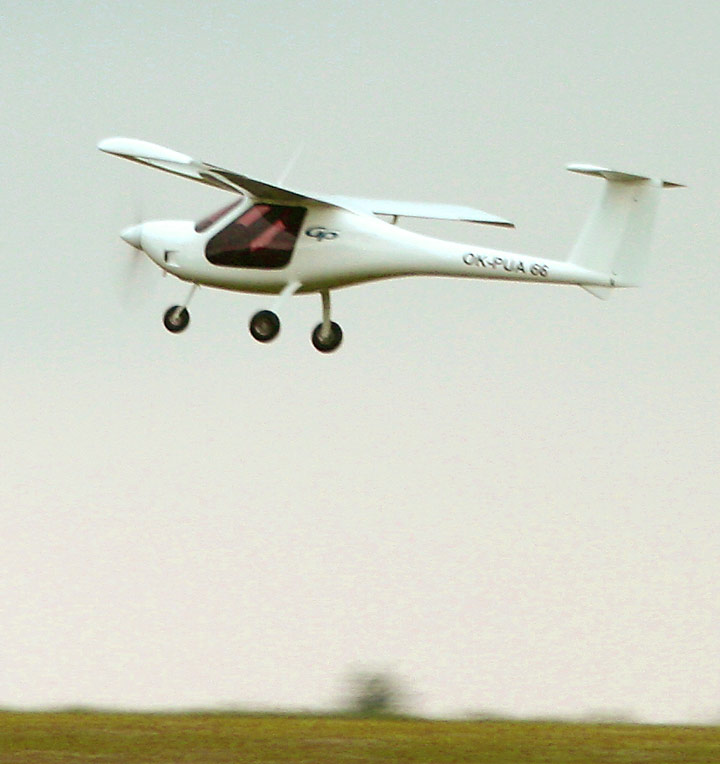
The company Skyleader has been on the European aviation scene since 1996, and produces various aircraft for the overseas market, including the Skyleader 600 (formerly the Kappa KP-5) which is already an ASTM-certified LSA (the 9th one to earn the sticker).
We got a sneak peak at the GP ONE, which is in development for the Euro market...with a possible LSA version in the future.
Scant details yet, but you can glean a sense of the airplane from the pdf here. And look at those sculpted composite lines...impressive.
The GP ONE just had it's maiden flight on May 26 - congratulations to the company and its Sales Manager Miroslav Boubela, who affirms the carbon-fiber composite construction airplane will be offered in Europe in Sept. of this year for 52,000 Euro or $63,500. That's an attractive number if they can pull it off: similarly-priced U.S. LSA like the Rans S-6ELSand X-Air are ultralight-style construction, whereas the GP ONE is all composite.
Skyleader also intends to market the airplane with a Rotax 912 UL 80 hp engine, Galaxy ballistic parachute, 3-blade ground adjustable prop, and other features as standard equipment.
Not sure how the company will meet such ambitious goals given production cost realities, but come September we'll be looking for more news of this beautiful new LSA.
Paradise Aircraft, based in Florida, joins the Facebook crowd with its own fan page here.Chris Regis, U.S. rep for the Brazilian-based company which has certified the airplane in the United States, Brazil, Australia and South Africa, tells me the company is moving ahead after a good spring sales performance with some company and product updates. On the Facebook page you'll find an a aerial view of the new 75,000 sq. ft. factory for producing the Paradise P1. The design just celebrated its 10th anniversary at the end of 2009.
Carbon-fiber float maker Meadand Paradise have teamed up to offer amphibious floats for the P1. The camping picture from owners Neil and Karen Salmi shows the "stuff" carrying ability of the P1. Not a lot of LSA could carry that volume of gear. Of course the total 1,320 lb. LSA weight limit still prevails, but that large "backseat" area is attracting buyers, as cargo is one of the consistent limitations among many models.
And check out the interior of the P1.
The U.S. model is essentially an LSA-legal version of a general aviation-certified aircraft, with the two rear seats removed as LSA can only carry two people total - but all that space remains!
---photos courtesy Paradise Aircraft and Neil and Karen Salmi
Here’s a spot of welcome news for all those who've been waiting to get their hands on a Cessna 162 Skycatcher:Kansas Aviation, Inc. gets first honors for putting the long-delayed S-LSA into service for flight training and rentals.
An interesting note: the school is a wholly-owned subsidiary of Yingling Aircraft, Inc., one of three domestic sites Cessna picked to assemble and test flythe Skycatcher once it arrives from the Chinese factory where it’s fabricated.
The airplane was first delivered to a retail customer, Bravo Sierra Group, which leases the aircraft to Kansas Aviation for use in its Cessna Pilot Center (CPC).
Rental rate harkens back to the day when sub-$100/hr rental rates were common: the Skycatcher is available at $98 per hour wet.
Dave Tiday, the school's manager and Chief Flight Instructor, believes the Skycatcher “will be key to developing the next generation of pilots.”
Powered by a Continental O-200D, 100-hp air-cooled engine with a fixed-pitch propeller, the Kansas Aviation C-162 has a Garmin G300 avionics system with a single, split-screen PFD (primary flight display) and an MFD (multi-function display).
The school will also offer a Light Sport Aircraft Transition Course to train certificated pilots in the differences between conventional GA single engine planes and the Skycatcher.
Congratulations to Kansas Aviation!
All-electric airplane fans, this'll stand your hair on end! Next month's 2010 EAA Airventure at Oshkosh, WI - easily the biggest air show in America every year - will feature activities focusing on the most exciting developments inelectric flight all week long.
Visitors to the show will find display booths, daily forums and demonstration flights out on the flight line. Can you say...Zap!?
And on July 30 there's a major event: Airventure's World Symposium on electric-powered flight. The day-long discussion will cover all aspects on the future of electric aviation.
Check out who's on the panel of moderators of aviation industry leaders:
* legendary Scaled Compositesfounder Burt Rutan
*Electric Aircraft Corporation founder and electric flight pioneer Randall Fishman (currently working on ElectraFlyer-Xtwo-seat S-LSA
* Yuneec International founder Tian Yu (Yuneec made a sensation at Oshkosh '09 with its two-place E430electric LSA),
* FAA Administrator Randy Babbitt
*Sonex Aircraftfounder John Monnett
* Earthstar Aircraftfounder Mark Beierle, whose eGull ultralight displayed at AirVenture '09
* Erik Lindbergh, who launched an Electric Aircraft Prize through his Lindbergh Foundationat Sun 'n Fun this year.
There will also be forums every day at the Aviation Learning Center (like the Symposium, presented by GE Aviation Systems) on safety and airframes, motors, fuel cells, propulsion, advanced batteries and controls and regulations.
Expect to see all-electric concept mockups, displays and flying prototypes. Yippee!
To register for the free symposium or participate yourself in the forums or presentations, contact Kelly Meyer at EAA headquarters at kmeyer@eaa.org or 920-426-4800.
AirVenture runs from July 26 to Aug. 1 this year at Wittman field. Be there or be reciprocating-spontaneous-combustion-powered square! --- photos courtesy ElectraFlyer and Sonex
For all you LSA California Dreamers out there, one of the oldest LSA schools in the southwest is worth a closer look. San Diego Sport Flyers has been rolling the LSA dice for more than two years now and reports it has grown to 50 members and claims to get "several calls per day pertaining to the Sport Pilot license."
AOPA recently praised the LSA school for its "right stuff" - and that was an unsolicited rave.
The school just added a Legend Cub to the fleet and plans to bring on the Icon A5 once it's through testing and development too, sometime next year.
Already online are the Gobosh 700, SportCruiser and Sting Sport shown. Tom Ellery, President of the operation, told editor Jessica Ambats recently that two high school students just got their Sport Pilot tickets and a 70 year old student will solo soon.
"I have to say," says Tom, "that we didn’t know what to expect when we first opened our doors, but it has been a great experience. We are working on putting a Remos plane in our local mall for Christmas."
The school operates out of Gillespie Field (KSEE) in El Cajon, CA.
Got a thriving LSA operation in your local area that you'd like to tell readers about? Help me get the word out with a comment below or send me an email at lsa777jim@gmail.com.
Whoopsie. In my last post on the Phoenix motorglider, I had some incorrect info that Jim Lee set me right on, so here's the skinny:
Urban Air USA which Jim represented and which imported and marketed the Lambada motorglider is being purchased, he sez, "with plans to return the Samba XXL (composite low wing S-LSA) and Lambada (S-LSA motorglider) to production."
Jim also notes Phoenix Air S.R.O. and his Lee Aviation LLC, dba Phoenix Air USA, are completely different companies with no relationship to Urban Air.
Also, I'd mentioned Evektor's new direct-sale program, but Mr. Lee also notes that Evektor is still working out the details and may not do direct sale ops but some other program instead.
I've got queries into the Czech company and will update once I hear.
Here's a hot item that should shake the dust off the notion that LSA are little toy airplanes. (Sorry, couldn't resist.)
With all the concern recently over ash cloud emissions from Iceland's Eyjafajallawhatever volcano that disrupted global air transportation (and also revealed how precarious airline business models must if, as reported, they were in drastic financial jeopardy after only a few days of lost revenues), comes this fun and good news:
A specially equipped Flight Design CT Supralite has been called into duty to measure atmospheric volcanic dust levels.
The Supralite is a version of the European CT line that is popular here as the CTLS. Duesseldorf Technical University’s Department of Volcanology set up the ongoing study, including rigging the cabin with an oxygen system for higher altitude measurements.
The program includes monitoring sulfur and particulate concentration in levels from 1,000 to 14,000 feet. The objective is to create a clearer picture of the density and dispersal pattern of volcanic ash clouds.
The CT makes a great research aircraft because of its good climb (1,000 fpm) and high ceiling capability over 14,000 feet. Add in the fast cruise, long legs, roomy cockpit for instrument monitoring equipment and the low cost of operation, and it's easy to see why the University chose the Supralite.
“As the CT series is a perfect survey aircraft,” said Flight Design's CEO Matthias Betsch (who was himself delayed returning to Germany from Sun ‘n Fun 2010 by the ash cloud, “Flight Design believes that more of its aircraft will be used for this kind of purpose.”
Just another example of how LSA are working their way into the mainstream by demonstrating utility.
Caught up with Jim Lee recently to find out what's up with the Phoenix motorglider I wrote about here a few weeks back.
The good news is his full time devotion to making Phoenix the Next Big Thing in LSA motorized soaring flight. He's renamed his Urban Air company Phoenix Air USA.
Believe me, if you haven't tried a motorglider, you're missing one of aviation's greatest experiences.
Imagine cruising along as fast as 115 knots on a thermally active afternoon. Up ahead, a big, white cumie cloud with a flat, gray bottom presents an irrestible invitation.
Here's where the fun starts: as you get closer, you turn off the engine, feather the prop, trim up for minimum sink, and start looking for the lift under the cloud. In a minute or two your search is rewarded with a good, strong push under the left wing - That's lift calling your name!
You quickly bank the Phoenix left, the vario starts singing, and up you go toward cloud base. Yee haw!
After an hour or so of working the lift and drifting downrange, you flip a couple switches, turn the key, and the Rotax 912 ULS hums to life and off you go.
For a real (not imaginary like this one) flight report, read Jim's right here. He compares the Phoenix to the Lambada, which it essentially replaces as that airplane is no longer in production.
Jim seems to like everything about the Phoenix, including it's 15-meter span, excellent sink rate, and the economical long range cruise given its beautiful all-composite streamlined shape.
I'd hoped to fly the Phoenix at Sun 'n Fun last April because I fell in love with the Lambada. But delivery to the U.S. was delayed.
Now, sez Jim, two are on the boat from Europe, with another coming soon after.
Even with current sluggish LSA sales numbers, there's little doubt this is one airplane to watch: if it's even a bit better than the Lambada I flew, as Jim claims, anybody with a hankering for motorized gliding flight will be smitten too.
BTW, Jim is no longer representing Evektor in the U.S. (more details on Evektor's direct marketing plans soon, as I receive requested details from the Czech headquarters.)
I've had my head buried in pilot reports, image processing and P&P's 2010 LSA Buyer's Guide. Guides in particular never seem like they'll be such a mind-numbing chore yet every time the same number of eyeball-jittering, typing finger-stiffening days roll by. Look for it in the Oshkosh issue, late June I think.
There are 107 registered LSA models on the books. I couldn't write about all of them so went with the top-selling 20, realizing even then some great airplanes get left out, so I factored in another couple dozen or so that stand a good chance of garnering market share in the future.
Most if not all The Magnificent 107 remain in some state of production - a minor miracle given our sluggish economy. Even more new designs approach ASTM certification this year. Clearly it's going to be a big pie -- with a lot of small slices -- for a long time to come.
Given our "Little Industry That Can" bravura, it's always a lamentable duty to report whenever a noteworthy aviation project goes down the tubes. But reality is reality: the Sadler Vampire project is looking for another owner.
The original Vampirerevved everybody up back in the early '80s as a unique, single seat ultralight.
Here's a summary from an excellent Wikipedia blurb:
The Vampire won Grand Champion Design at Oshkosh in 1982. Bill Sadler started up American Microflight, which became Sadler Aircraft Co., and by 1984 was cranking out 4 units per month! Not long after, ABC's 20/20 broadcast its infamous, recklessly distorted "expose" on the danger of ultralights that nearly killed the industry singlehandedly, or I should say underhandedly...a cautionary testament, more evident than ever in today's media, to the press's power to inflame irrational fear in the general public, whatever the truth might be.
Anyway, Sadler, facing the dramatic industry downturn everybody suffered after 20/20, sold the rights to Aero.V.Australia.
By the late '80s, Sadler developed a military version: the aptly-named Piranha, with enclosed cockpit, bullet-resistant Kevlar fuselage pod, machine gun mounts in the wing roots, all to support a ground attack, interdiction and counterinsurgency mission. Holy Third World combat ops, Batman!
A UAV (unmanned) version was developed around the same time but never flew without a pilot.
David Littlejohn, VP of Sadler Aircraft, just informed me that once the principals looked at the books, they realized they'd have to sell 40 units just to break even on R&D expenses in their attempt to bring the Vampire to the S-LSA market.
In his own words (excerpted):
"...the economic downturn ...has taken its toll on the Vampire. I'm disappointed to report that the Vampire project is being suspended and offered for sale.
I apologize to all that have been following our progress. As is so often the case though, we had lots of "interested" folks, but not folks interested enough to commit...money in escrow and secureaircraft. As such, we failed to meet the required pipeline commitments needed to receive second-stage capital from our investors. It's frustrating. But such is reality in periods of economicuncertainty.
At this time we are seeking buyers of the company. Specifically, we have the prototype Vampire and various parts for three more Vampires already under construction. We are asking for $50,000 obo (development costs were more than 15 times [that] amount). And that price includes a nearly brand new Jabiru 3300 with under 100 hours on it.
At this time the company is being sold as a package including: prototype Vampire (has flown, but not flying now), wing sections for 4 aircraft (unskinnned), raw aluminum to skin the wings, spars and tail booms for 2 planes, landing gear for 4 planes, various other miscellaneous parts.
The Vampire was an exciting original from day one...if it's resurrected yet again, maybe it should be renamed the Lazarus - this is one design that just won't die.
We sincerely wish everybody connected with Sadler Aircraft the best of good fortune going forward.
If you've checked into Facebook since January you may know that PiperSport has its own page that you can become a fan of (I am, along with 9200 others so far!)
What you probably don't know is there's a fascinating video interview that chronicles why and how Piper decided to add social media such as Facebook and YouTube to its marketing strategy for the already-popular LSA.
Very very interesting, and likely a sign of future marketing efforts from ad-cash-starved LSA makers.
To date, the only other company I know that has a Facebook presence is Gobosh, and they've been there for some time.
I won't reprise the entire video clip (it's well worth watching), but here are some of the highlights:
Back in January, Piper's content creators were tasked with making a video for the imminent launch of the PiperSport (the rebadged, "Piperized" CZAW SportCruiser). They also had to set up a Twitter feed, YouTube channel and the Facebook fan page.
And they had a week to do it in.
Greg Jarboe does a video interview for Search Engine Watch with Michael Kolowich of Boston's DigiNovations, who gives a thumbnail of the entire project. Here's the vid - in case it's slow to load, go here:
Things that caught my ear from the video:
* The goal was to create a less formal market presence that would work on authenticity, including interviews with Piper notables including Piper's Chief Engineer and my longtime colleague Bart Jones, the company's Chief Pilot.
* Piper wanted a "live feel".
* It had to be up in time for the January launch date at Sebring.
* A PiperSport was sold online the very first week...and paid for with PayPal!
* the creators input key tag phrases to help web searchers find the site, including: light sport aircraft and the brand names of key competitors - very smart.
* The Facebook video was viewed more than 7000 times the first week.
* PiperSport's YouTube channel has more than 22,000 viewings for several of its videos.
A lot of marketing types would do well to watch Piper's venture into social media, especially if it proves a sales success.
Getting the word out to the great unwashed about the virtues of LSA flight - even with the inevitable "mainstream media" gaffes and general buffoonery it typically displays regarding general aviation - is an ongoing devotion for all LSA entrepreneurs, from manufacturers to flight schools.
Witness then this terrific video clip that enterprising young Brit (profiled here a few weeks ago) Charlie Thompson ofSanta Monica Flyers pulled off on Los Angeles's local, venerable tv station, KTLA.
I remember KTLA and it's veteran newscasters from age 5 (that's six decades back, sports fans!) The station has a long and storied history, so having it run a spot extolling the virtues of LSA during its prime broadcast slot and also posted on the web is a real plum for sure.
Charlie wisely told the reporter the aircraft he was flying was the PiperSport, although in fact he's training and doing demos in a CZAW SportCruiser.
There were the usual daffy phrases we've come to expect from "infotainment" news spots, such as "This airplane is singlehandedly changing the face of the flying community," and "Beat the hassle of airports!"
To be fair, the reporter did a reasonable job considering how badly the media usually does with aviation stories.
For instance, he accurately reported on the virtues of LSA, using automobile comparisons - what else from car-centric L.A.?:
* low-fuel burn: "at 40 miles per gallon, it beats every car in mileage except the Prius!"
* aircraft price: "It costs the same as a high-end Porsche!"
* and fuel burn again: "You can fly yourself to Las Vegas for only $45!"
Ah, how I miss the Land of Lah.
But image is everything, likewise positive stories - any positive stories - about general aviation.
So even though we LSAers know that SportCruiser (which the tele reporter happily dubbed "PiperSport Cruiser") is essentially the same airplane as the PiperSport, I still say "Well done, Charlie Thomson!"
Two wild-and-crazy Swiss airline pilots decided to take a busman's holiday - one hell of a busman's holiday - by taking two Flight Design CTLS S-LSA on a little jaunt, in celebration of the birth of aviation in Switzerland 100 years ago.
Their destination? The airport they launched from April 30th: Sion, Switzerland.
The catch? Before they return to Sion, they're flying around the world! Dan Johnson's got a detailed writeup on his Splog but the short tell is the pilots, Yannick Bovier and Francisco Agullo, will fly 27,500 miles over 18 countries, five continents and two oceans.
Both craft are modified to carry extra fuel - 120 gallons each, instead of the stock 35 gallons.
They're also carrying survival gear including water ditching rafts as their route crosses both the Atlantic (Africa to South America) and the Pacific (America to Viet Nam).
As of today they've made it across from Africa to Natal, Brazil.
Keep track of their progress and get the in-depth story on their website. Bon Voyage Francisco and Yannick!
I thought I'd share a couple interesting videos recently posted on the Icon Aircraft website. There's a multimedia gallery of high-profile, appealing eye candy, including YouTube videos chronicling various aspects of the ongoing test program for the company's A5 amphibian S-LSA.
Two I found particularly interesting: a stall sequence and a potpourri of recent flight test ops.
First, the stall sequence shows the classic tufted airflow indicators taped to the wing to demonstrate inflight stall progression from the root outward.
Watch the tufts near the root begin to wiggle and change direction first, demonstrating loss of lift. Then see the stall move outward from the root and along the trailing edge. To my eye, it seems like the middle of the wing completely stalls before the root. I'd like to know about the aerodynamic significance of that, and why the wing doesn't stall more classically at the root first.
Also notice how the flaps appear to be taped at the inboard seam, which would seem to prevent deployment from 0 degrees.
Whatever it all means, it's fascinating to watch aerodynamic design theory demonstrated so dramatically!
The other video is a series of short in-flight clips of water/land-launching capabilities, water taxiing versatility and in-flight maneuvers, both from a photo plane and from the ground.
I watched the Icon go through its paces at the Oshkosh Seaplane Base last summer (along with hundreds of other folks) and was particularly impressed with the nimble, smooth handling and sexy inflight look of the amphib.
In sync with the company's marketing approach for the Icon - "Jetski For The Sky!"- the flight video shows a couple (wingless) jetskis in formation on the water with the A5. Very cool, very smart - but nothing this company has done so far seems remotely second class.
Case in point: Demonstrating how well-connected, sophisticated and well-funded this company's principals are, an Icon mockup is on display at John F. Kennedy Airport in NYC to celebrate Jet Blue Airline's 10th anniversary!
Icon continues to refine the bird toward ever-more-benign (translate: fun and safe for new pilots) handling that should greatly aid its push to attract watersport/non-pilot types to its market segment.
High speed water taxi testing continues along with ocean operations, such as challenging entry/exit tests near Long Beach, CA.
Everything seems on track to deliver the bird by 3rd Quarter 2011...hey, that's next year! Can't wait for a demo myself. Maybe I can get my LSA water rating in an Icon: wouldn't that be a trip?


 The company hopes to make an important announcement at Oshkosh Airventure.