Knocking around the net looking for signs that Light Sport is alive and well...
<>Michael Combs is nearing the end of his 19,000 mile odyssey- what a vision. Latest word from PR dude Dave Gustafson is that the Flight for the Human Spirit in a Remos GX has made it to my old west coast stompin' grounds. Five jewels of the left coast - San Diego, Burbank, San Luis Obispo, Monterey and San Jose - were on the itinerary for one magical flight day over one of the most beautiful stretches of coastal landscape in the world. God speed Michael, 18,000 miles and 45 states and you're nearly done.
Imagine the human experience he's having, flying all summer, meeting all the great people he's met. I'm jealous, I admit it.
BTW, pilots are encouraged to fly along for any portion of Michael's Flight.
<> Slow recovery? Double-dip recession? Not as far as Skyraider Aviation is concerned. This hustling sport pilot flying club and training center is plenty active at Denver's busy Centennial Airport as well as at it's Erie Municipal location nearby. A new PiperSport just joined the training and rental fleet - that's bound to perk anybody up - to share duties with two Gobosh 700s, an Evektor SportStar and a Remos G-3. The outfit has operated for four years and claims to be the first in Colorado to offer specific Sport Pilot training.
<> Loosely Connected To Light Sport Dept., Another of those weird and wonderful experimental alternative-powered aircraft just made its maiden flight. AeroVironment, the braintrust company begun by the late Dr. Paul MacCready, who gave us the Gossamer Albatross, first successful human-powered aircraft, back in the '70s, has begun flight test on Global Observer,an unmanned hybrid-electric surveillance prototype that will eventually be powered by a liquid hydrogen fuel system.
It launched from California's famed Edwards Air Force Base and flew for an hour at 4,000, controlled from a ground LRE (Launch and Recovery Element, officialese for a flight sim-like control booth) with a retired Air Force light colonel at the controls. Can you say "X-Box"?
Here's an in interesting image phrase the company uses: "The future is unmanned". Indeed, it's pioneering all kinds of hand-launched small electric-powered surveillance aircraft for the military (can mini flying grenades be far behind?)
Global Observer will ultimately fly between 55,000 and 65,000 feet for up to a week at a time for disaster relief, reconnaissance and surveillance. Expect some sophisticated tech fallout that will in time trickle down to general aviation from projects like this.
<> Not to be outdone by the West, a local news organ in the Greenville, South Carolina area reports that Spartanburg's downtown aircraft have discovered Light Sport aircraft and anticipate it will "fuel growth" at the airport. The report compares the initial purchase price and operating costs between LSA and GA aircraft.
Although it was a bit wide-eyed in its example of an LSA that will fly at 120 knots for 9 hours straight, the story clearly gets the advantage the public is beginning to perceive from our piece of the personal flight pie, and that's a good thing.
<> Finishing up back on the west coast comes a news story, this time from Yakima, WA, that profiles a retired LSA pilot who flies his Challenger II from nearby Prosser Airport. The article accurately chronicles the inception of the Sport Pilot rule and claims Light Sport training is the biggest student draw at the airport -- a "miniature boom in activity" - an increase of 50% in operations since 2007.
In this economy, it's good to see the word is getting out and people remember that instead of moping around, there are still plenty of affordable ways to get out and enjoy life - like flying an LSA! --- photos courtesy Skyraider Aviation, AeroVironment and Quad City Challenger
One of the surprise hits last year was Chris Collins's Midwest LSA Expo. Held at Mount Vernon Outland Airport (MVN) in Illinois, the new show attracted 42 airplanes and 30 exhibitors and what was reported far and wide as a focused and motivated LSA crowd. Many sales were closed in the months following the 2009 gathering. One main factor was the psychological continuity Midwest provided after Sebring (Jan.), Sun 'n Fun (Apr.) and Oshkosh (July/Aug). By postponing the "end of summer" flying mindset into early Fall, normally an aviation wind-down time for pilots who live in the less temperate parts of the country, potential customers got one more opportunity to refine their buying decision process. The Midwest LSA Expo will run a week earlier this year: from Sept. 23-25. Mark your digital calendars!
Attendance should be strong: there's a huge population base in the midwestern market that stretches from Chicago to New Orleans, Denver to Charlotte.
Chris Collins hopes to grow the event and does everything to make it as enjoyable an experience as possible, including shuttles to local restaurants and lodging from the airport.
So far, more than 35 vendors are scheduled to show up and they're bringing many of the most popular LSA. Scroll down on the home page for the current list and you'll see that quite a few of the biggest players and several others you've wanted to see up close will be there.
I'll be there too to get in some flying and flight reporting that proved to be impossible in the crush of Oshkosh.
If you're flying in, here are some particulars:
<> 6500’ x 150’ main runway
<> five precision approaches including ILS
<> 9.25 acres of concrete ramp space
<> Class “E” airspace <> ARFF (Aircraft Rescue and Firefighting) Index A for those of you familiar with this safety index.
<> Aircraft exhibitor spaces will be right out on the main ramp to make lots of demo flights easy...that's important when you're out there kicking tires.
Watch this video. Open your mind. Put yourself in this cockpit. Imagine it happening to you. Think of the people you love and who love you.
Dan Johnson posted this yesterday on his blog (my writing home away from home) with some tasty comments based on his years at BRS parachutes, so I'll direct you there for his in-depth overview.
My purpose in posting here is more personal. I want you to fly safely your entire, long life.
But any pilot -- and you know who you are -- who has so far convinced him/herself that an airframe parachute shouldn't be an essential component of any aircraft, please watch this video.
Then try to make a rational argument afterwards against recreational aircraft carrying onboard chutes.
Yes, the pilot is engaging in high-stress aerobatics, which the vast majority of us will never do. And yes, you can make an argument that carrying a chute increases your likelihood of taking more chances in the air because you feel you always have a backup.
But do you drive more recklessly because you buckle up in your car? Most of us don't. I think this is not a strong argument against having one when you might need one...because if you don't have one, you'll never need one again. That much we can say with certainty, as would the young pilot in this video.
Finally, who can say with certainty that nothing catastrophic will ever happen to us in flight? Nobody. Absolutely nobody.
I bet you know somebody who would be alive today if they'd had an airframe chute on board. I can think of several over the years...friends and colleagues I miss, some a great deal. I think sometimes about how their families must miss them still. We never forget the people we love.
BRS Aerospacekeeps stats on their saves. The tally is now 253 people who are still alive because of this technology, including the young man here who walked away unhurt after losing an entire wing just 700 feet above ground.
If you want to cut to the chase, fast forward 1:50 into the video to see the breakup itself, and watch the rest for a slow-motion replay.
Here's what's remarkable to me:
<> How fast the pilot deployed the chute...and still the main lanyard connected to the chute seems to have wrapped around the fuselage at least once, which is why I think it descended -- very slowly as you'll notice -- in a nose-down attitude.
<> How quickly the chute deployed even with the high-speed rotation around the roll axis
<> How the pilot was completely unscathed, though as Dan reports the airplane caught fire after "landing" and burned up (more pix on his site).
I'm going to beat this drum until the drum breaks, then I'll get another one, because airplanes are mechanical devices. Something, in time, will fail. You can count on that. We don't need to fly in fear, but we shouldn't kid ourselves either. Why not be as safe as we possibly can?
The other day I pulled into a rest stop on the interstate, opened the door, and watched as a tide of oil ran out of my engine onto the asphalt. I called it Mini-Gulf of Mexico because five quarts makes quite a flood.
Four hours of cleanup and an auto tow later, the mechanic told me the engine drain plug had unscrewed, although it took 2,000 miles since the last oil change -- at the VW dealer -- to do so!
Again, my point: an airplane is a mechanical device. Something can and will fail in time, and you might not catch it in a preflight.
Or you might hit a bird or an airplane and be disabled and unable to land safely.
In the news, a high time pilot had a midair the other day and was killed. It happens, and piloting skill or lack of it had nothing to do with his death.
With 35 lbs. of parachute on board, you've got a hole card against the unknown. Why wouldn't you want that? Why wouldn't your friends and loved ones want that for you?
The young pilot in this video was 5 seconds from losing his life after that wing let go. Instead, because he was smart enough to install an airframe parachute, he's got one hell of a story to tell for the rest of his life, and a family and friends who will welcome him home for all the years ahead.
That's an incredible exchange for a few thousand bucks and 35 lbs. of weight, wouldn't you say?
In mid-water taxi toward its anticipated production date sometime next year, ICON Aircraft was at Oshkosh again with an impressive display booth/tent/hangar, and every time I walked by, whether early morning or late at night, there were always people oggling that beautiful airplane.
The company has made two major design changes over the last few months which are interesting and worthy of attention.
1. The wing flaps are gone, ostensibly to "simplify" pilot operations
Company spokesfolk say they weren't getting sufficient benefit from the flaps to justify their weight and complexity.
2. A desire to work in more spin resistance has led to airframe tweaks, including wing cuffs to lower the stall speed of the composite carbon fiber S-LSA.
I and others had wondered, after our first looks at that streamlined profile when the A5 debuted a couple years back, how ICON was ever going to get stall speed below the 45-knot minimum, even with flaps. Icon already has an AOA (Angle of Attack indicator) on board so pilots will be able to monitor actual wing performance in reference to incipient stall, but the more docility the better in the Light Sport category, eh what?
Meanwhile, ICON says Liberty Aerospace of Florida, which makes the composite Liberty XL2 monoplane, and Flytech Kft. of Hungary will be the prime structural composite makers for the A5.
Stated reason for the "outsourcing" is to hasten the arrival of delivery day for the hundreds of buyers who've already plunked down deposits.
As many other U.S. LSA companies already do with foreign-produced components, ICON will assemble the entire airplane, install systems and perform all flight testing and finishing, at its Southern California plant.
The online techzine Gizmag just posted an interesting quote from ICON: the company claims fully one-third of its customers are not yet pilots! That tells me how well ICON has penetrated the non-pilot market in its attempt to link the A5 with broadly popular recreational water sports such as jetskiing and power boating.
Current price quote to order a standard A5 is $139,000, for delivery in 2012.
In the wake of its week long focus on electric-powered flight at the just-concluded Oshkosh AirVenture 2010, EAA just announced a $60,000 prize to "speed development of electric flight technology."
As I posted earlier here, during the World Symposium on Electric Aircraft, Erik Lindbergh awarded his LEAP prize to three companies for their contributions to the burgeoning technology: Yuneec International'sE430, Alex Lange's in-productionAntares 20E motorglider, and John Monett's E-flight Initiative.
Prize money will go to the individual or corporation that demonstrates the most promising level of achievement in electric-powered flight at AirVenture 2011. "Most promising" will be more fully detailed once EAA completes its "assessment of the status of electric flight", according to the official release.
EAA President Tom Poberezny, at left with representatives of the four companies that will make equal contributions to the $60,000 prize money:AeroLEDs, Aircraft Spruce & Specialty, Dynon Avionics, and Wicks Aircraft Supply, had this to say:
“They, like EAA, recognize that much of the innovation in the aviation world has come out of homebuilders’ workshops and the creative environment that is part of AirVenture Oshkosh."
The E-Flight Prize is one of a to-be-disclosed series of programs EAA will establish over the next decade to stimulate R&D in electric flight.
Poberezny encouraged other leaders in the EAA community to augment the prize over the next year.
Entry forms and competition criteria will be posted on EAA's website or by writing EAA E-Flight Prize, P.O. Box 3086, Oshkosh, WI 54903-3806.
Back finally from 12 days at Oshkosh and the DC-3 fly-in that preceded it, I'm cranking out images and stories gathered there but couldn't wait to get this one to you.
Below is a condensation of my column that will run in the November issue. It involves an airplane that caught everybody's eye when it debuted a few years back, but languished from lack of development and promotion and seemed on its way to obscurity.
It was called the Phantom then, when T&T Aviation brought it to America from its native Hungary.
Cruising into the big Lycoming display at Oshkosh in search of the new 115 hp, IO-233-LSA, I was once again gobsmacked by the low-riding, beautiful Falcon LS -- the name T&T certified it under back in 2008 -- as number 82 on the current list of 109.
In the interim, Renegade Light Sport and its principal go-to guy Chris “Doc” Bailey have just bought out T&T’s interest in the LSA. For various reasons T&T decided they couldn't fully run with the project.
Meanwhile, Doc has some big, big plans.
Here are the highlights:
<> The supersexy Falcon LS resembles a Red Bull race plane for a good reason: its makers, Corvus Aircraft of Hungary, also build the Racer 540 that crack pilot Peter Bensenyei flies in Red Bull Air Races.
<> 15,000 hour professional pilot Doc Bailey has already ordered the first 100 Lycoming IO-233 engines and plans to put them in Falcons...and sell the first 100 for$115,000!
<> Why is that news? Every one of those Falcons will be delivered withGrand Rapids synthetic vision EFIS...with built in GPS...and built-in autopilot. That makes the price considerably more attractive. Can you say “loss leader?”
<> Doc plans to build the airplane entirely in Kansas City, making it an all-American product.
<> The airplane is all-composite construction, with kevlar, carbon fiber and e-glass components.
<>“We hope to give a boost to the market,” Doc says with infectious enthusiasm. If he can pull this off, it sure won’t hurt!
<> He plans to have that first 100 Falcons out and flying “within two years – and every airplane will have the IO-233 - with fuel injection.”
<> New owners will be given checkout transition training for free...as much as they need and want.
Stay tuned...once they’ve flown off the hours, I hope to fly the airplane at the Midwest LSA Expo next month.
Meanwhile, it’s great to see the Falcon LS back in the news...it is an exciting, gorgeous LSA with a conventional American powerplant that should push a lot of LSA buyers who’ve been waiting right off the fence and into LSA ownership...because that terrific price won’t hold forever.
<> The Sleeping Giant Wakes Dept.: Big news from China: IndUS Aviation threw a big lunch bash today at Oshkosh to break word of its exciting new program to shift production of all its Thorpedo LSA to China, as part of a unique collaboration with the country's government and private industry to begin to grow Chinese General Aviation. The program will launch this fall at the new LuYangHU General Aviation Development Zone in Weinan, China. There is currently no GA permitted in the country. This will be the first - carefully studied and controlled, to be sure - attempt to bring private aviation to Chinese citizens: a fascinating period in history, and one that, with this partnership, aims to open the country wide to sales of light sport aircraft from all over the world.
Indus will build LSA for its domestic market as well as worldwide - including Chinese citizens. Boeing, Diamond, Cessna and Airbus have also established manufacturing sites at Weinan, but Indus is the first LSA company to be invited to build a "primary entry level aircraft in large numbers to meet the expected demand for such aircraft in India and China," said Dr. Ram Pattisapu, IndUS CEO.
The "prototype" airspace will be 100 square kilometers in size, with a legal ceiling up to 3000 meters, and will be the only place for now where private Chinese aviators will be allowed to fly.
Congratulations to all involved.
<> Had a good talk with Tecnam's Ray Swanson, VP of Distribution and Avionics, about the company's new iPad (or computer)-based Sport Pilot Course which was introduced here and will be offered to TFC (Tecnam Flight Center) members across the country.
Through TFC, flight schools can gain access to software flight training programs, such as the Tecnam Sport Pilot CourseDan demoed for me and P&P Publisher Mike McMann. I'll be going through it in a few weeks as I refresh for my biennial flight review in Nov.
The programs were developed in collab with MS Aviation and Hilton Software, LLC to maximize student pilot training.
Students can carry the iPad with them everywhere, drop it into the center panel slot on their Tecnam trainer for geo-referencing sectionals, airport info and much more. Tecnam North America Prez Tommy Grimes, above, presents an iPad loaded with the Sport Pilot course to the first student to go through the program.
Course materials are constantly refined and uploaded wirelessly to students...very cool, I'll have more on it down the road.
<> Today I spent the day dreaming of electric sheep...or airplanes, listening to an all-day symposium with the likes of legendary aeronautical designer Burt Rutan, FAA's head Randy Babbitt, Bertrand Piccard who spearheads the Solar Impulse project, Erik Lindbergh, visionary grandson of Lucky Lindy himself, Craig Willan, emcee, research engineer and I gather the person who brought these luminaries and several others under one roof for the EAA Electric Aircraft World Symposium 2010.
It was fascinating, and I'll have more to say about it when I put the article on electric flight together for Plane & Pilot but here's a few highlights: Rutan: "I want to watch the young designers, I want to inspire you to do the new stuff even if it doesn't work right the first time. I want to see an electric manned aerobatic airplane here at Oshkosh." Chris van Buiten (Sikorsky's Firefly electric helicopter): "Electric airplanes are hard; electric choppers are very hard." Piccard: "The bottleneck in manned electric flight isn't energy capture, but energy storage. The Solar Impulse project (which flew all night recently on battery-stored solar power) is not only an airplane project but an energy project. We proved we can fly all day and all night and have energy left over." Eric Lindbergh presented the 2010 LEAP awards - and $25,000 in cash prizes (which recipients donated right back to LEAP!) - to:
<> Yuneec for its e430 (Best practical electric aircraft)
<> Sonex (Best electrical aircraft subsystems)
<> and theAntares 20E electric motorglider (first certified production electric aircraft.)
I watched theAntaresfly yesterday (see photos). Two words: most impressive. General Electric, Tesla Motors and Ford Motor Company all had excellent presentations on electric-powered cars and discussed applications and implications for electric flight.
As I've said before (and Erik Lindbergh among others echoed today), these are the Wright Brothers days of electric flight. So what if flight times are "only 1 or 2 hours" so far? Remember how long the Wright's first flight was?
Of course, many technical challenges are ahead...but the first flights are happening, history is being made, and interest is surging, as this well-attended seminar in the vast EAA Museum Eagles Hangar proved today.
Catching up with Jon Hansen and James DeHart of Hansen Air Group in Georgia. They rep the lovely line of FK Lightplanes German composite aircraft for all of North America (except Florida.)
Jon had just delivered the first FK 9 ELA to a customer, who was there when I came by with four of his six children, all boys. Three of them, at least so far, want to be pilots like their dad. Nice looking family as you can see.
The FK 9 ELA (which will be redubbed Sparrow to avoid confusion - some folks think "E" means Experimental) is a handsome, clean airplane that deserves to capture attention. There are a whole line of these immaculate S-LSA, including the FA-04 that set a cross-country flight record for LSA last year and the gorgeous FK-14 Polaris that was originally going to be offered by Cirrus until that company ran into difficulties last year.
Jon also told me that Lycoming has given word that it's LSA-destined 233-LSA engine will begin deliveries at the end of the year after a period of R&D. The company is now taking orders, and it's reportedly less expensive than the 100hp Rotax 912. Although 30 lbs. heavier than the Rotax, it delivers 115hp and has an alternator that pumps out 60 amps to power everything in the cockpit including the smoothie blender. What? You don't have an ASTM-certified smoothie blender in your airplane? It's what's happening...I call mine the iSmoothie.
More on the Lycoming tomorrow.
Also spent time with Powrachute's VoyagerElectraChute which as you can guess is electric-powered on 128 volts of li-po batteries. These guys are a happening company with several gas-powered LSA models but the electric model is in a class by itself, if powered parachutes are your bag, so to speak. More on this tomorrow too, gotta get to the field.
<> Jan Fridrich , head of Europe's LAMA, just sent me some intriguing stats from his comprehensive data crunching of S-LSA (or overseas equivalents) official registrations up to now.
Europe continues to lead overall numbers with just under 1850 total. The U.S. tally is now over 1200.
Sales have been light for the majority of the 70+ suppliers but there has been some shifting of position in the ranks. The top ten U.S. sellers to date are:
Flight Design (CTLS, MC) 316 American Legend (Piper Cub models) 156 CubCrafters (Piper Cub models) 136 Tecnam (P2008, several others) 133 Czech Sport Aircraft (SportCruiser) 126 Remos (Remos GX) 121 Jabiru (J-230, -250 etc.) 96 Evektor (SportStar Max) 91 TL Ultralight (Sting S4, Sirius) 73 AMD (Zodiac models) 72
You may be interested in how the numbers fall for country of origin of all 3-axis S-LSA registered aircraft: The U.S. and Czech Republic each represent 26% of the total, with Germany right there at 25%. Australia and Italy make up another 18%.
Again this is registration data, not actual numbers produced, but is a good medium term data point for tracking the health of the industry. Noteworthy in these stats is CubCrafter's climb to the third slot on the wings of a strong spring sales showing.
Also moving up a notch ahead of Remos is Czech Sport Aircraft whose SportCruiser is now the PiperSport.
Also, kit airplanes as noted yesterday are doing relatively better than S-LSA on the short term at least with companies like Legend and Rans, which continues to steadily gain market share and is now 14th overall in registrations. Remos has been inexplicably quiet for awhile, more on that usually high-profile maker later.
Finally, TL Ultralight also passed AMD (which has had airframe failure and redesign challenges). Beneath the radar as I said yesterday are the actual sales numbers. FAA registrations which is the data Jan is massaging here will naturally lag behind.
For example, I talked with Piper's Chief Pilot Bart Jones who's now involved with the PiperSport as well, and he confirmed Piper has sold "around 40" airplanes since January. In this economy, that's robust. Sidenote: Piper's dynamic CEO Kevin J. Gould resigned from his leadership of the company, part of a shuffle of the front office personnel. No word on why he rode out of town. I wish him well, I thought he was a strong and positive presence for the company but Imprimus, Piper's controlling interest, apparently felt otherwise.
To repeat from yesterday's blog, an American LSA distributor told me he visited the Czech Sport Aircraft factory where PiperSports are built and saw 24 or more in various stages of assembly.
Likewise Cessna, the other sleeping giant, is just ramping up delivery on its huge backorder log, which at one time was listed at more than 1,000. No official word in the intervening three years from theSkycatcher's test setbacks to first deliveries on how many of those orders may have been cancelled but no horror stories are flying about, so we should see strong registrations from both companies in the next six months, which will if nothing else boost industry morale.
Of course nothing boosts the feel-goods more than seeing airplanes going out your own door, and that's something that not many dealers can say just yet. The prevailing mood seems to be wait-and-see among the buying public.
Grateful thanks to Jan Fridrich for his inciteful latest report on the industry.
Recovering from the mud soupfloods that crippled arrivals a few days ago (so many airplanes typically park on the grass), things began to dry out enough yesterday to bring robust opening day attendance, helped in large part by the beautiful weather. Humidity was manageable, temps were in the mid-80s.
A great start for EAA (which reportedly draws 45% of its yearly revenue from Airventure), with lots to see and talk about. Highlights: Yuneec, (which seriously needs to update its website), is the Chinese electric aircraft company that blew open the hangar doors of everybody's electric flight dreams last year with the debut of the beautiful E-430 all-electric S-LSA. They've guarded some tasty secrets since, which came to light yesterday.
I spent a half hour with Managing Director Clive Coote to get updated, here are some highlights (more details down the road, and in my electric flight article which will run in a P&P issue this fall).
<> The E430 will likely begin deliveries end of 2011 or early 2012.
<> Many improvements big and small to the graceful design, including removable wingtip to shorten the span by 7 feet for easier hangaring;
<> Two - not one but two - new electric aircraft have been acquired and will be part of the rapidly-expanding Yuneec product line. Both come from noted German designer Martin Wezel: the two-seat, t-tail Viva motorglider, German designed, that will also be S-LSA, with some phenomenal specs, including a folding propeller that streamlines to the nose cone, and a 38:1 glide ratio! More on that soon.
<> The second new airplane is called the Apis 2. It's a single-seater with a retractable propeller pylon behind the pilot. Here's a brief profile on Yuneec that ran last week in the NY Times.
<> Meanwhile Yuneec displayed the eSpyder, an electric-powered single-seat ultralight based on the FlightStar marketed by Flight Design's Tom Peghiny that wowed the airshow crowds last year. The e-Spyder is refined: longer wingspan, lighter structure...and twice the battery capacity. Clive Coote said flight times anticipated to be around an hour - the original projection when it debuted last year - and final price should be $27,995. Still in development, deliveries next year also.
<> Terrafugia had itsTransition Roadable Aircraft ("flying car" for us non-marketing types) on display. The new model, which ditched the disappointing canard, sports a twin-tail boom design instead. Here's a rendering, they don't have the full-scale mockup out yet.
Current specs:
<> The boys at Midwest Sport Aviation showed off theirCheetah XLS, a tasty tube/fabric S-LSA which I hope to fly after the show. Nice paint job!
<> The gang atLegend Cub had a good first two quarters although things inexplicably slowed down in June. Enthusiasm for the new Cub Classic(under $100,000 - typically outfitted Legend Cubs go for upwards of $125,000) is yet to kick into high gear but company head Darin Hart says they're doing a lot of kit business. Consensus is if pilots have the moolah to buy a Cub, they'll buy one fully tricked out. Those more financially challenged (like myself) will typically find a used Cub or a rental at a local airport.
<> Piper Aircraft reportedly sold 40 aircraft since announcing the PiperSport last January at Sebring. One person who visited the Czech production facility saw 10 on the assembly line and another 12 ready to start.
<> Those and other sales won't show up on the radar until they're actually registered. FAA registration numbers for all S-LSA according to Jan Fridrich's latest tally were a fairly weak 68...but actual sales seem to be significantly higher.
<> Meanwhile, other significant news is coming in a couple days from a longtime LSA producer and LAMA...stay tuned for news on Thursday.
Oshkosh has been deluged with a record downpour the last few days, which complicated arrivals because of the soggified grass fields...where most of the planes park and campers do their camping thing.
Many airplanes were turned away over the weekend but nothing deters the Airventure show, which must go on.
Several things already buzz, then out to the field for me to discover more and get things rolling (I got here late last night from the wonderful DC-3 Fly-In 4 hours south of here - half of the flying DC-3s in America, 35 total, turned up to be admired by thousands of visitors - a wonderful show.)
Back to Oshkosh and LSA-centric events: <> If two flying cars aren't enough - the Terrafugia Transition and I-TEC Maverick I've reported on in the past- here's another one: the Caravella. It's an intriguing work in progress and they're exhibiting at the show. <> Oshkosh never fails to deliver sheer wonderment but here's one for the books: a rocket-powered helicopter (terms you don't expect to hear together!). Read about it here, but the short tell is hydrogen peroxide powers rotor-tip jets to get things going. Endurance claim is 1.5 hours! Can you say LSA green helicopter in one breath? This amazing project deserves a closer look.
<> Sonex Aircraft, which is working on its own electric-powered project, introduced the Onex, a single-seat, homebuilt E-LSA. I'll have pix soon. The bird has folding wings a la the F4U Corsair warbird (makes trailering legal) and will be powered by an AeroVee engine.
Off to the show!
Posting from the road: I'm in Illinois covering a major DC-3 75th Anniversary event for Plane & Pilot for the next couple days, then on up to Oshkosh Airventure for the show all next week. I'll be posting LSA news from the road but before I head out into the super-humid, super hot thunderstormy day, here's a couple things to look for if you're Oshkosh bound: LAMA Light Aircraft Manufacturers Association headed by Pres. Dan Johnson expects a robust event schedule for Airventure so I'll bring you updates whenever possible.
Some tidbits for what's to come:
<> The LSA Mall is full again this year even with the sluggish economy. Here's who signed up:
<> Flight Design (CTLS)
<> Remos (GX)
<> Piper (PiperSport)
<> Arion (Lightning LS-1)
<> Rainbow Aviation / 3Xtrim (Navigator)
<> Breezer Aircraft (Breezer II)
<> Pipistrel (Virus)
<> Hansen Air Group / FK Lightplanes (FK-9 ELA)
<> Tecnam (P-92 Echo Super)
<> Evektor (Sportstar)
<> Jabiru, with two models (J-230 and J-170)
<> X-Air (LS)
<> Progressive Aerodyne (SeaRey)
<> IndUS Aviation's Thorpedo
<> Renegade Aircraft (Falcon)
LAMA also signals a surprise announcement from IndUS at the show. Aviators Hot Line, the sponsor of the LSA Mall, has a new "Aviators Helping Aviators" promotion to help LAMA members.
Also on the bubble from our friends at Flight Design:
At its annual press lunch next Tuesday, July 27, Flight Design USA prez Tom Peghiny and sales dude John Gilmore will have some things to talk about, including:
<> New CTLS Floatplane is flying and on display at the booth
<> CTLS Full-Motion Simulator (I've been wanting to try this out to see how well it mimics the CT - the ship I got my Sport Pilot ticket in)
<> the CTLS Lite, announced at Sun 'n Fun, will be on display, I'll be flying it soon
<> The MC is now an ASTM-certified legal SLSA (#109) and also approved in Europe
<> Updates will be announced on FD's exciting Hybrid Powerplant project which I blogged some time ago
<> And a surprise announcement from FD also. ---photos courtesy Pipistrel and Flight Design
Gang, with all the excellent publicity the Terrafugia Transition "roadable" LSA airplane has gotten this last year or so, you'd think they were the only game in town.
Meanwhile, back at flying car HQ, here comes the sleeper, with some important news under its (canvas) hood.
I've blogged about the Maverick Flying Car a couple times now (most recent post).
It's a project created by I-Tec in their mission to aid third world indigenous people in remote and rugged locales around the world.
To paraphrase Luke Skywalker, if the Transition is the bright promotional center of the universe, the Maverick has been the planet farthest from it...until now.
They've been quietly, and quite effectively, judging by the video below, getting the job done with their own unique approach to the flying car concept.
Without further ado, check out the vid below of the Maverick LSA...Para-buggy, Para-Car, Dune-Chute, whatever.
Make sure you check out the suspension and see how it handles the sand and all those bumps.
Then read on and I'll tell you what's coming next week at Oshkosh.
The company hopes to make an important announcement at Oshkosh Airventure.
I'll let spokesman Troy Townsend take it from here: "The rumors are mostly true. All of our testing is complete and we...may have our final ASTM paperwork at Oshkosh or right after.
Please come and say hello, we will most likely be with the Zenith aircraft boys at the Zenith booth."
Watching the Maverick tool around in the boonies...then take to the air...is a masterful stroke of video producing. Gotta say, it gave me a little thrill.
It even sounds cool!
Orto evoke the movie Jerry McGuire, "You had me with the ground stuff!"
Yesterday in our Ultraflight Radio interview Jim Sweeney and I compared and contrasted two red-hot digital instruments for the cockpit: theAdventure Pilot iFly 700 and the Apple iPad with its tons of aviation apps (see my earlier post on the Zlin iCub here:)
I also swapped emails with Walter Boyd of Adventure Pilot, who created and does all the incredible programming for the iFly 700, to learn more about these two amazing digital toys. Full Disclosure Moment: I just bought an iFly 700 yesterday - couldn't deny myself any longer!
First, the iPad, (projected to sell at least 6 million units by year's end -- over 3 mil already!), offers much more than a GPS moving map. As Walter acknowledges, it's a portable computer optimized for viewing rather than producing information, as on a laptop or netbook.
Next, it's big: a 9.7 inch diagonal, beautiful bright screen. And also a bit heavy at 1.5 or 1.6 lbs. (3G model). Other iPad features:
<> a headphone jack but that's it for external device connections.
<> connects via cell or wireless to the internet - a potential legal issue.
<> runs a zillion aviation apps, some free, some $99 or more; some with pricey yearly subscriptions
<> internal battery powers it for up to 10 hours.
<> $499 to $829 depending on configuration iFly 700 features:
<> has USB and MCX (external antenna) connectors for future upgrades to external devices
<> is a (non-FAA certified) navigation "aid" with incredible interactivity: touch-screen point-to-point flight planning, airport information, TFRs, airspace info and AIM airport info.
<> plugs into aircraft cigarette lighter or other cockpit power source, or accepts auxiliary battery power for 4 or more hours run time, depending on battery.
<> requires a $69/year subscription for frequent updates, which includes ALL U.S. sectional charts including Alaska and Hawaii and also IFR charts.
<> costs $499 including case and mounting aids.
Clearly, these are two very different animals that intersect at the GPS moving map functionality crossroads.
Which is right for you? Depends on whether you want the galaxy of fun apps that come with the iPad, or the iFly 700, a simpler, highly intuitive, powerful, extremely easy-to-use navigation aid.
More details:
Some of iPad's apps such as WingX Pro7 offer heaps of information but require annual subscription - in this case, $99/year. To get sectional charts you need another app, ForeFlight Charts, for $10/year, but it's only charts.
The iFly 700 allows "one-stop" navigating: Flight planning, route changes, airport info, nearest airport and more features are a fingertip touch away. And info displays right on top of the sectional chart. It's very cool, very easy to use, and just crammed with about any aviation data you could want.
"The iFly 700 is dedicated as an aviation GPS," Walter Boyd told me. "Folks buy it for the simplicity of it. They don't want to search for and install software. They don't want to wonder whether a problem is hardware vs. software, and who should they call for a fix."
The biggest difference between the two units is how each downloads information. "The iPad uses assisted GPS," Walter continues, "which relies on cell phone towers for initial location, which can take longer. If you lose the signal lock in flight, it may have a very tough time reacquiring the signal. Also, I don’t think there's an option for an external GPS antenna – so some cockpits will have GPS lock problems with the iPad."
"Native GPS devices traditionally are smarter at finding their location. It's rather amazing: signals from the satellites don't go through anything that's visible, even a sheet of paper! They bounce around off buildings, roads, trees. Sometimes units receive echoes or inverted signals...and yet it all works somehow. It does explain why GPS sometimes has trouble locking on some days but not others. Ripples in the ionosphere can effect that too."
'For those difficult situations, an external antenna can be put it the ideal location, but I don't believe you can do with the iPad, as it doesn't even have a USB port."
The big question I have, and I'm still looking for more information on this subject, revolves around the GPS legality issue.
"FCC requires airborne cell devices like iPad to disable 3G transceivers by switching to 'airplane mode'. Acquiring signals from the air can set off cell towers for miles around, which puts an enormous drag on the wireless grid. That's why FCC doesn't want cell phones powered up in the air, and you can get fined for it."
"Also, the iPad is big, and not an easy fit into every panel. We chose a 7" screen as the best balance of size and readability."
For the iFly 700 (excellent FAQ here), tap-in power isn't always reliable or available in aircraft. Many users (including me) buy auxiliary battery packs which power the unit for a few to several hours. That brings the overall weight into the same range as the battery-inclusive iPad, so call that one a push, although the battery can be stored elsewhere in the cockpit.
There's so much more to say about these two devices, I could write a book on it...which would be obsolete before it hit the printers as the tech is evolving rapidly.
Certainly the iPad with its 100,000 apps has tremendous appeal for aviators and gadget lovers alike. Colin Summers has a Top 20 iPad Apps article in the Sept. 2010 issue of Plane & Pilot you'll want to read to clue you in to iPad's aviating chops.
iFly 700 takes the other route: it's more conveniently sized, simpler, focused on its mission and highly capable at it, and expandable in ways the iPad may never be, such as being able to offer XM satellite weather and ADS-B (essentially a new technology in development that will be a low-cost, enhanced version of radar.)
Upgrades due out next month include north-up or track-up orientation.
Bottom line in this conversation is to think about what's right for you. You can make a strong argument for each one over the other.
One thing to remember, neither of these devices are certified by FAA for GPS navigation. Consider them "advisory" and as with any electronic device, make sure you've got analog instrumentation backup, a spare GPS, and/or a good old current sectional, just in case.
---iPad image and iFly 700 video courtesy Apple Computer and Adventure Pilot
I had some fun today talking with Jim Sweeney, guest host ofRoy Beisswenger'sUltraflight Radio Show. Our first topic was the state of the LSA industry. I first picked my pal Dan Johnson's satellite-view brain of the LSA Big Picture to glean we're looking at an industry that is weathering the economic storm and ready for an upswing.
Once the economy really ramps up, many observers feel LSA, which remain an incredible bargain compared to new GA airplanes, should pick up smartly. Let's toast that happy day! Tom Peghiny of Flight Design USA tells me sales are picking up, particularly from his network's dealers who are selling their inventory aircraft and ordering replacements.
We'll have hard numbers from Dan's colleague Jan Fridrich after Oshkosh Airventure on FAA registrations through mid-year but in general it's good to remember that companies are doing whatever it takes to survive in this prevailing market psychology of uncertainty.
Flight Design, (still #1 U.S. seller), Jabiru and American Legend lowered prices, created "economy" models or both, to stay competitive.
Flight Design has the CTLS Lite at around a $20,000 lower price, Jabiru dropped it's high winger by a like amount, and American Legend came out with its Classic J3, Continental O-200-powered model at $94,895.
Companies like Rans Aircraft, Aeropro and American Legend among others enhance their market appeal by selling both kits and ready-to-fly airplanes. Rans in particular has thrived for more than 25 years with this strategy and is still going strong.
So although, as Dan says, the industry is still in a "bit of a funk", companies are finding ways to hang in there.
As for the much-ballyhooed, yet-to-occur "shakeout" of the 77 companies producing ASTM-certified LSA aircraft since the beginning several years ago, a grand total of five have shut their doors or are up for sale! That's rather amazing.
New airplanes continue to debut too:
Two TL-3000 Sirius from SportairUSA (my flight report will be out in Nov. or Dec. Plane & Pilot) will deliver this month, with another planned right after Oshkosh, according to Sportair's Larry Martin. Cubs still rule: Nearly 33% of all LSA sales are Piper Cub clones, says Dan.
We thought of at least two good reasons: Light Sport flying is a recreational experience after all, and what speaks to simple, fun flying better than a Cub? (I'm getting time locally in a 1946 version myself, and having a blast.)
Then there's the 75 years of trustworthy (and FAA certified) safe Cub operation. Older pilots inclined to still look askance at this brave new world of ASTM industry self-certification might believe their safest LSA flying remains with the old-school, truly wonderful Cubbie.
Positive signs for all you LSA-curious Airventure visitors this year: Dan Johnson's LSA Mall should be full again. What a great way to compare your dream planes side by side.
One last note: there are around 2000 LSA out there now. That's helping companies stay afloat by providing parts and service to those airplanes. Flight Design alone has more than 500,000 partson hand to do the job right. Engine overhauls, brake maintenance etc. all help bring in revenue for those makers in it for the long haul.
So let's keep our chins up by remembering that, with more than 100 LSA models to choose, there's enough variety and a broad enough price range to suit just about anybody looking for a way to do fun flying.
My case is a perfect example: I can't afford an LSA outright...so I'm renting one at $50/hour wet! Hard to say no to that deal, eh?
So even if renting is the way you have to go for now, or shared ownership, or joining a club, there's no reason you can't find an LSA to help you get 'er done -- and at a reasonable tariff.
---photos courtesy American Legend, Rans Aircraft and Flight Design USA
News began filtering out today that FAA informed LAMA (Light Aircraft Manufacturers Assoc.) that it is strongly considering imposing new mandates on how S-LSA designs are approved.
LAMA chairdude Dan Johnson broke the news today that FAA may require LSA makers to pass compliance audits managed by a team of FAA inspectors, rather than the manufacturer-certified voluntary nature of the certification program as it now exists, where airframe builders can pay for an audit through LAMA, but are notrequired to do so. Earl Lawrence of EAA will talk in depth about this development on the Ultraflight radio program next Tuesday starting at 11 EST, so tune in to grab the full skinny. I'll be on it later in the program to talk about the state of the industry and what's coming with electric LSA.
Meanwhile, I'll get more info from Dan on what this portends for the S-LSA industry as a whole.
In addition to taking over the audit process, the specially trained FAA team would rigorously inspect the first production version of every new LSA model for compliance to ASTM standards. Only then would an airworthiness certificate be awarded.
Dan noted that although nothing is out in official legalese yet from the Feds, the industry should brace itself for the possibility.
All this comes on the heels of a recent FAA spot check of a number of manufacturers that demonstrated several companies were not maintaining full compliance with ASTM standards. Self-certifying that LSA are built to the ASTM spec is a vital - and revolutionary - underpinning of the entire LSA concept. So when significant numbers of makers aren't toeing the line, FAA's "protect the public" mandate kicks into gear.
Even though the safety record of LSA so far has been right in line with typical GA numbers, unairworthy LSA falling out of the sky is a nightmare scenario nobody needs or wants to see. The structural integrity problems and fatal crashes of Zodiac kit built and S-LSA models are a case in point.
Dan Johnson, in his LAMA role sent a letter to members suggesting they review their compliance. He also said that he believes FAA will not make mandatory audits retroactive but instead limit them to new models coming down the pipeline.
More on this potential major story in the weeks to come.
Since everybody seems to be talking these days about flying cars, specifically the Terrafugia (the company excels at promoting its Transition model, which recently got a weight allowance boost from FAA), I thought I'd update my earlier post about the I-TEC Maverick Sport Model.
It's a cool idea, this flying car developed for missionary work in 3rd world countries like the Amazon rainforest, where getting from village to village can be daunting to impossible for traditional vehicles.
Instead of folding wings, it uses a paraglider-style canopy for lift. I-TEC (The Indigenous People's Technology and Education Center) spent 7 years in development. I talked with one of the I-TECcies at Sun 'n Fun 2010 and they're pretty proud of this compact, relatively inexpensive vehicle.
Changing from road warrior to sky king takes just a few minutes. Once rigged, the fabric-fuselage Maverick lifts off in 250 feet, climbs at 500 feet per minute, and rips along at just under 40 knots.
It tips the scales at the LSA-legal max of 1,320-lb., with no special FAA allowance required.
One nice innovation is the mast/spar system, which makes inflating the canopy easier than the conventional powered parachute method.
The car/bird is Florida street legal now, can keep up with traffic on the highways, and rides and flies using the steering wheel and gas pedal.
Floats are even available!
Acouple days ago I promised to follow up on the Paris Green Air Show so here we go.
The show is held (2010 is the 2nd year) at the Musee Air + Despace, at Le Bourget airport, the field where Charles Lindbergh landed the Spirit of St. Louis and where the huge Paris Air Show takes place every other year (next up in 2011).
It's mission statement is implicit from the phrase on the evocative splash drawing: "L'aviation du futur". It took a bit of digging and some web translations to find out more about the show that Gizmag first posted about the other day.
The explosion of imaginative designs and concepts at the show is staggering: very much like the first years of aviation after 1903. Dirigibles large and small, including man-powered balloons; aircraft engines with zero CO2 emissions; aircraft powered by electric, solar and hydrogen fuel cell engines; noise and pollution reducing sustainable development concepts for airports, runways and aircraft "villages": all in all, quite a hoot, I'd love to go to the next one.
Exhibitions included:
* Sunseeker II and III, Eric Raymond's solar-powered motorglider that has 121 hours of flight logged and has crossed the U.S. on sunlight alone.
* Alatus-M, an electric-powered ultralight composite motorglider with some amazing features: cartoppable like a hang glider, certified to German and American standards (FAR-103), retractable engine platform, one person/40 minute setup. Electravia electric engine delivers 26 hp and 1hour 30 min. flight time. Empty weight is 253 lbs., with another 264 lb. load capability. At current exchange rates, you can buy one today for $43,400.
* The APEV electric Demoichelle, an ultralight-style "flying ladder" wing and three-axis framework, initially powered by a small Rotax, now fitted with an electric engine: the AGNI 112 R electric motor, with Lithium Polymer KOKAM 74V batteries.
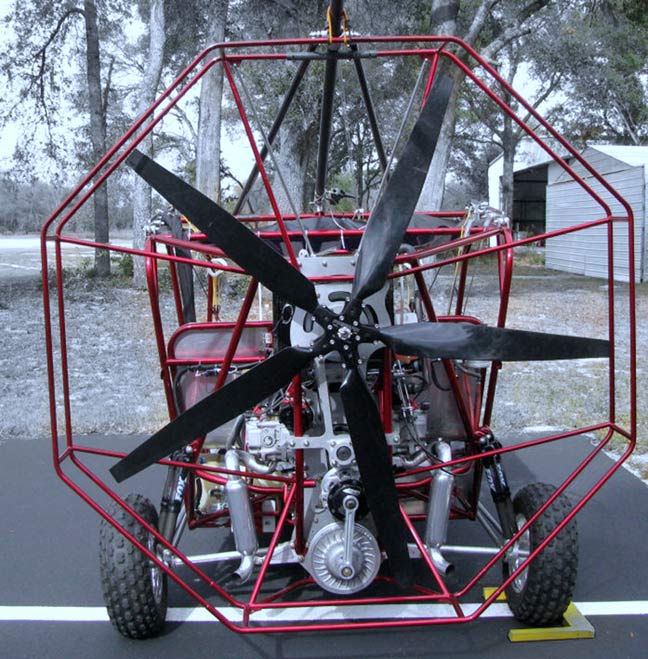
* And here's a shot of the electric powerplant for the e-Fun Flyer para-trike I mentioned last post.
Lots more to read about, check out the links above.
--- whale graphic by Studio Massaud & ONERA; other images courtesy Gizmag



 The outfit has operated for four years and claims to be the first in Colorado to offer specific Sport Pilot training.